Payments
Instant payments, ISO 20022, CBDCs and payment orchestration, and what they do to bank economics.
Payments in transition
How messaging standards, orchestration, digital currencies and the retreat of cash are rewiring payments, and what each shift asks of a bank's technology and economics.
View the series →All on Payments
Amex's $350m AML penalty puts card flows inside the risk assessment
US regulators found American Express missed about $13bn of suspected trade-based laundering because its AML programme was built around deposits, not the card business.
The Fed's stablecoin rules land 113 days before the GENIUS deadline
With every federal regulator's draft now published, US banks must decide before January whether stablecoins are a product, a threat to deposits, or both.
Wells Fargo takes tokenised deposits to corporate clients
A launch starting with dollar-to-sterling payments this autumn moves tokenised bank money from industry initiative to client product.

The Fed's payment account and the end of bank-only payment rails
A proposed account would give eligible non-traditional institutions direct access to Fedwire and FedNow. Correspondent banking for fintechs is about to change.

US banks are not choosing between deposit tokens and stablecoins
In one week, the largest US banks backed tokenised deposits for settlement and a Zelle stablecoin for remittances. Each form of digital money is finding its own job.
Seventeen US banks back a shared network for tokenised deposits
The Clearing House's initiative puts on-chain settlement of bank money inside the existing banking system, connected to RTP and CHIPS.
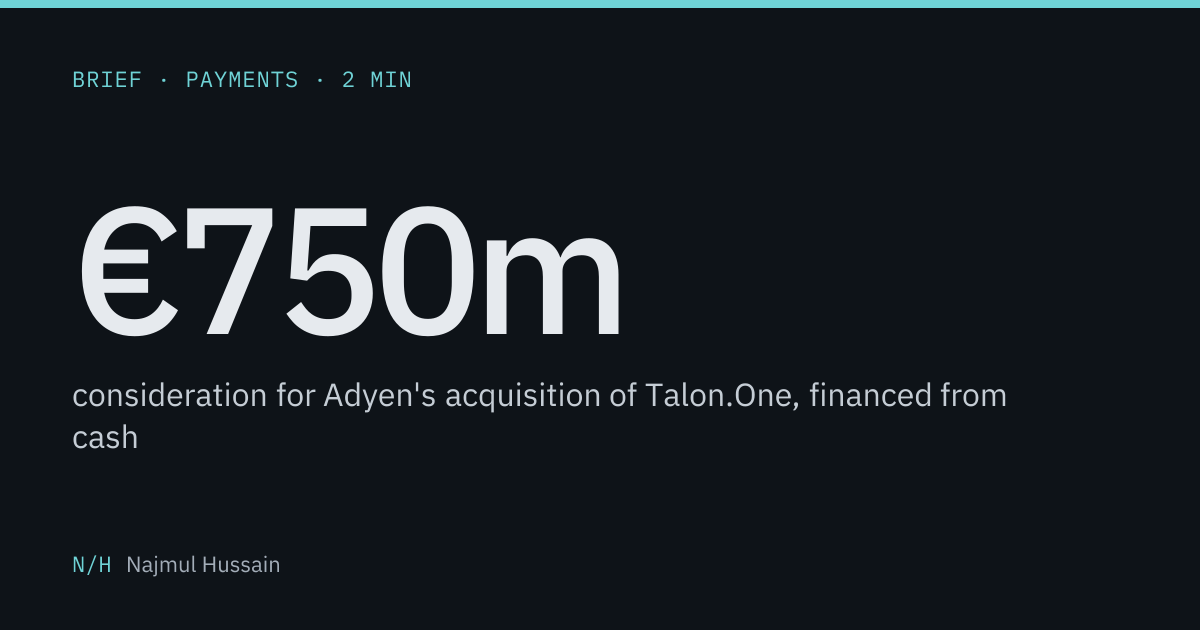
Adyen buys Talon.One to decide the offer before the payment
A €750m deal moves loyalty and promotions into the payment flow, the moment a merchant knows exactly who the customer is.
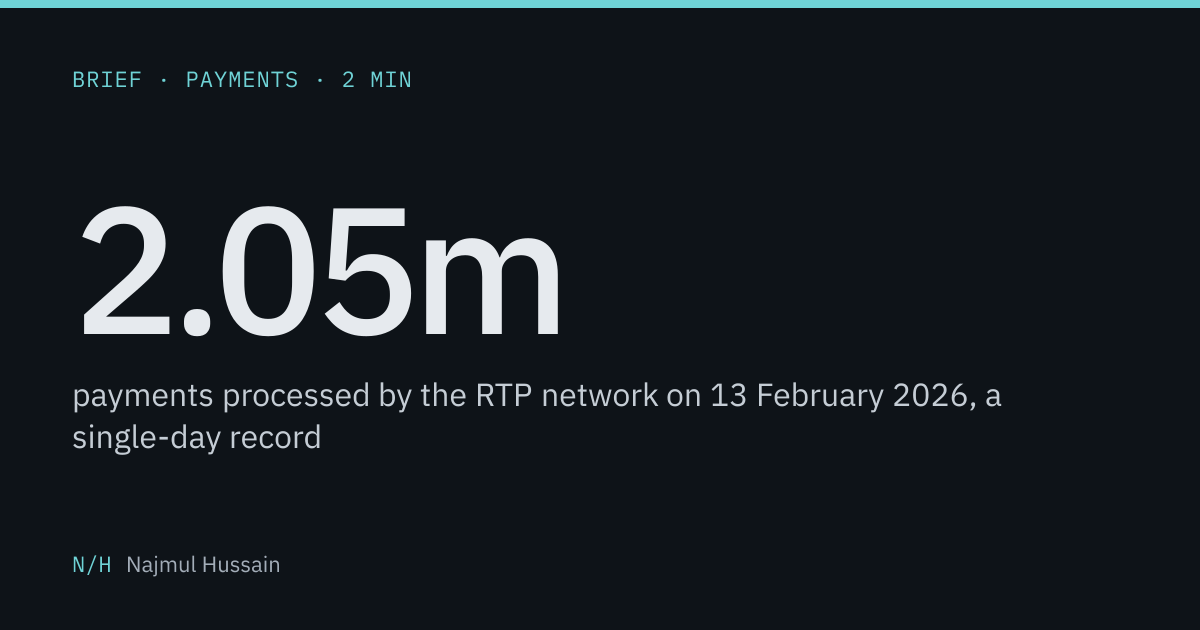
US instant payments pass two million a day, led by consumers
RTP's February records were driven by wallet transfers, earned wage access and gig payouts, not the business use cases banks planned for.
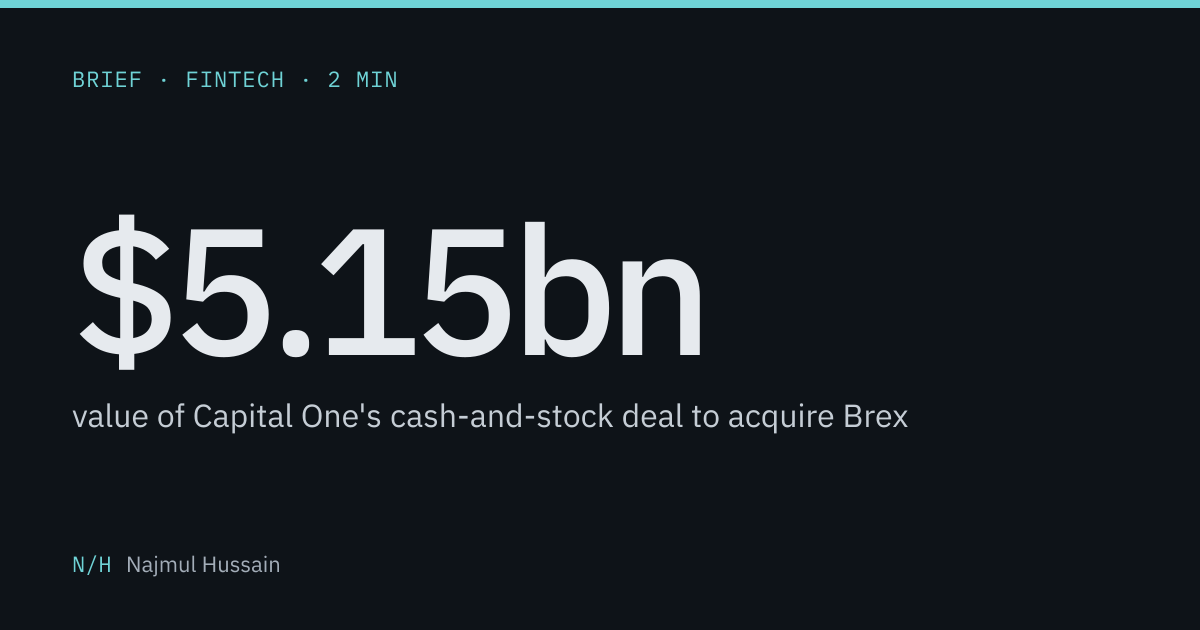
Capital One buys Brex to own the business payments software layer
A $5.15bn deal for an AI-native corporate card and spend platform shows where the largest card issuer thinks business banking value is moving.

Seven shifts bank leaders should plan for in 2026
What the last quarter of 2025 tells boards and executive teams to put in next year's plan, and how strong the evidence is for each.

Europe's payment reform makes fraud a bank balance-sheet line
The PSD3 and PSR deal moves impersonation fraud losses onto banks and, for the first time, onto platforms. Fraud prevention becomes a P&L discipline.
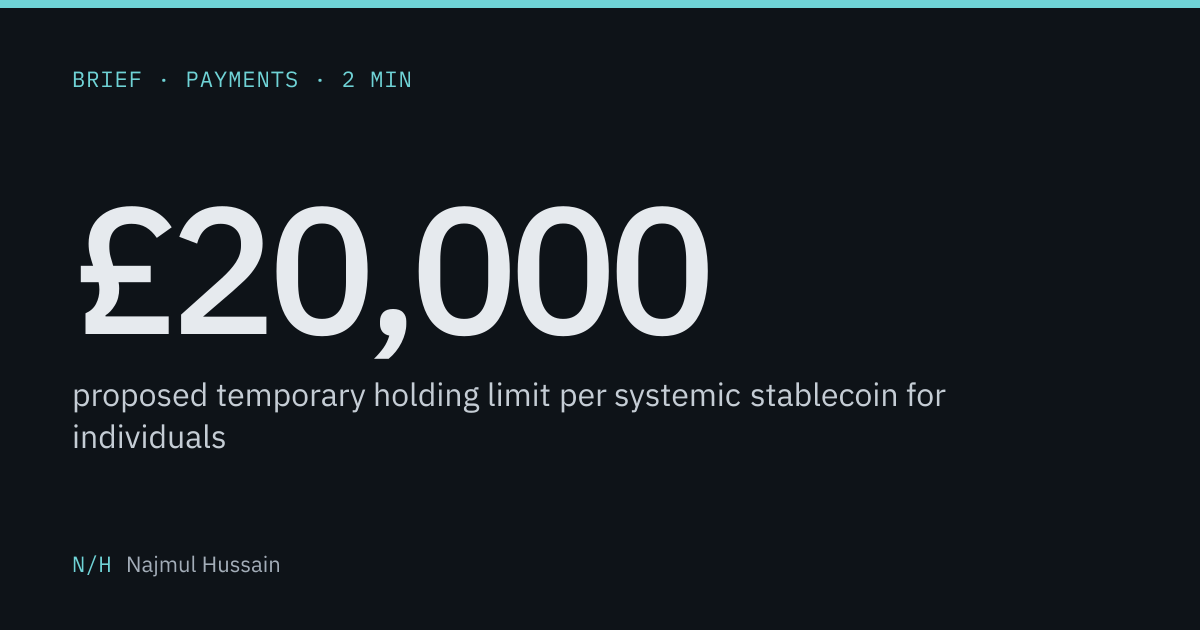
Bank of England sets the terms for sterling stablecoins
Holding limits and a 40% central bank deposit requirement show the UK wants stablecoins in payments without draining bank deposits.

AI agents will shop for your customers. Who vouches for them?
Card networks are building a trust layer for agent-led checkout. Banks that treat it as a network problem will lose the relationship it creates.

Visa Pulls the Plug on U.S. Open Banking: Data is the New Battleground
Visa's quiet shutdown of its U.S. open-banking unit has turned up the heat in a simmering data war between banks and fintechs. With banks eyeing fees for customer data and regulators rewriting sharing rules, technology leaders must rethink strategy – the U.S. risks falling behind Europe and Latin America in the race to control financial data.

Checkmate: The Federal Government's Countdown to Cashless Payments
For CIOs and fintech leaders: by September 30, 2025, the U.S. federal government will stop issuing paper checks for most payments. This seismic shift promises big efficiency gains and reduced fraud, but it also creates major headaches — from serving unbanked recipients to overhauling legacy systems. This analysis digs into the tech and operational upheaval behind the headlines, and outlines how the transition can spark bold innovations in inclusive payments and digital infrastructure.

Digital Currency Revolution: CBDCs and Their Impact on Global Banking
Exploring the transformative potential of Central Bank Digital Currencies (CBDCs) and their implications for the finance industry.

Transaction Director – A Unified Payment Orchestration Platform
Transaction Director is a centralized payment-processing platform for banks and businesses, offering real-time visibility, high-volume throughput, security, compliance, and streamlined operations—bringing all payment channels under one unified dashboard.

ISO 20022 Transformation – Building Interoperable Hubs & Test Strategies
ISO 20022 is a global standard for financial messaging that enables seamless data exchange between financial institutions. This article outlines its concepts, benefits, use cases, and a structured approach to implementation, focusing on interoperability hubs and comprehensive test strategies.